
The Flavorful World of Vegan Kimchi
If you’re looking for a vibrant dish that brings a burst of flavor and crunch to your table, then Vegan Kimchi is your answer! This beloved Korean staple is not only savory and spicy; it’s also packed with nutrients and probiotics that are great for your gut health. Did you know that kimchi is a staple ingredient in many Korean households? Families often make it together, passing down recipes through generations, making it a nostalgic dish filled with love. If you’ve ever had the pleasure of making or tasting traditional kimchi, like the version I shared on my blog recently, this vegan iteration gives you all the fantastic flavor without the animal products! So, dive in and discover why Vegan Kimchi should become a go-to dish for your family gatherings or cozy nights in.
What is Vegan Kimchi?
Ah, Vegan Kimchi! The name sounds fancy, doesn’t it? It probably has you wondering, “Who decided to call it kimchi anyway?” Well, that’s a mystery as fascinating as the crisp tang of the dish itself! Some say it hails from ancient Korean history, while others believe it’s just a delicious way to preserve veggies. After all, they say the way to a man’s heart is through his stomach, and what better way than to serve a plate of this fermented delicacy? The best part? It’s ridiculously easy to whip up in your own kitchen, ensuring that everyone at your family gathering leaves with a satisfied belly!
Why You’ll Love This Vegan Kimchi
Vegan Kimchi is not just a side dish—it’s the main star in your meal lineup! Full of personality and flavor, it complements rice, noodles, or even as a filling in wraps and sandwiches. Plus, making it at home is a fantastic way to save money while still enjoying hidden gems usually found only in restaurants. And let’s not forget the toppings: a sprinkle of sesame seeds or fresh green onions can elevate this dish to new heights. You might even find that its zesty kick rivals other great dishes like Vietnamese pickled veggies! Why not gather the family and see who can create the tastiest batch?
How to Make Vegan Kimchi
Quick Overview
Making Vegan Kimchi is both easy and satisfying, with a delightful texture that manages to be both crunchy and soft in all the right places. The best part? You can have your batch ready to ferment in just 30 minutes!
Ingredients for Vegan Kimchi
To make your delicious Vegan Kimchi, gather the following ingredients:
- 1 medium Napa cabbage
- 2 large carrots, julienned
- 1 radish, julienned (or daikon for a milder flavor)
- 4 green onions, chopped
- 5 cloves garlic, minced
- 1-inch piece of ginger, minced
- 2 tablespoons red pepper flakes (adjust to taste)
- 1 tablespoon salt (sea salt works best)
- 1 cup water
Step-by-Step Instructions
- Prepare the Cabbage: Cut the Napa cabbage lengthwise into quarters, and then chop it into bite-sized pieces. In a large bowl, sprinkle salt over the cabbage, mixing well to coat evenly. Let it sit for about 2 hours to soften and draw out moisture.
- Rinse and Drain: After 2 hours, rinse the cabbage under cold water to remove excess salt and drain thoroughly.
- Make Your Paste: In a small bowl, combine the minced garlic, ginger, and red pepper flakes to create a spicy paste. If you enjoy a milder kimchi, feel free to reduce the red pepper flakes.
- Mix Vegetables: In a larger bowl, combine the drained cabbage, julienned carrots, radish, and chopped green onions. Add the salt-and-pepper paste and mix until all the vegetables are well coated.
- Pack It In: Transfer the vegetable mixture into a clean, airtight jar or container. Press down to ensure the mixture is tightly packed, leaving about an inch of space at the top for the mixture to expand as it ferments.
- Fermentation Time: Leave the jar at room temperature for 2-3 days. This time will vary depending on your local climate—feel free to taste along the way to see when it’s to your liking. After that, move the jar to the refrigerator, where it should stay good for about a month!
Top Tips for Perfecting Vegan Kimchi
To make your Vegan Kimchi outstanding, here are some pro tips:
- Substitutions: Want to spice things up? Try adding some chopped bell peppers or cucumbers to the mix.
- Timing: If you prefer a stronger flavor, allow it to ferment longer at room temperature.
- Avoid Common Mistakes: Make sure to use clean utensils for handling the kimchi to avoid any unwanted bacteria that can spoil the batch.
Storing and Reheating Tips
After making your Vegan Kimchi, store it in an airtight container in the refrigerator. It can last up to one month but is often best enjoyed within the first two weeks for optimal crunch and flavor. Kimchi doesn’t require reheating, serving best straight from the fridge to maintain its probiotic benefits. If you want to spice up a meal, add chilled kimchi to rice bowls, salads, or even tacos.
Making Vegan Kimchi is not just about the vibrant flavors; it’s about the memories created in the kitchen. So gather your loved ones, roll up your sleeves, and let the delightful crunch and zing of this dish bring everyone together! Enjoy the preparation as much as the eating, because good food is meant to be shared. What are you waiting for? Let’s get kimchi-ing!
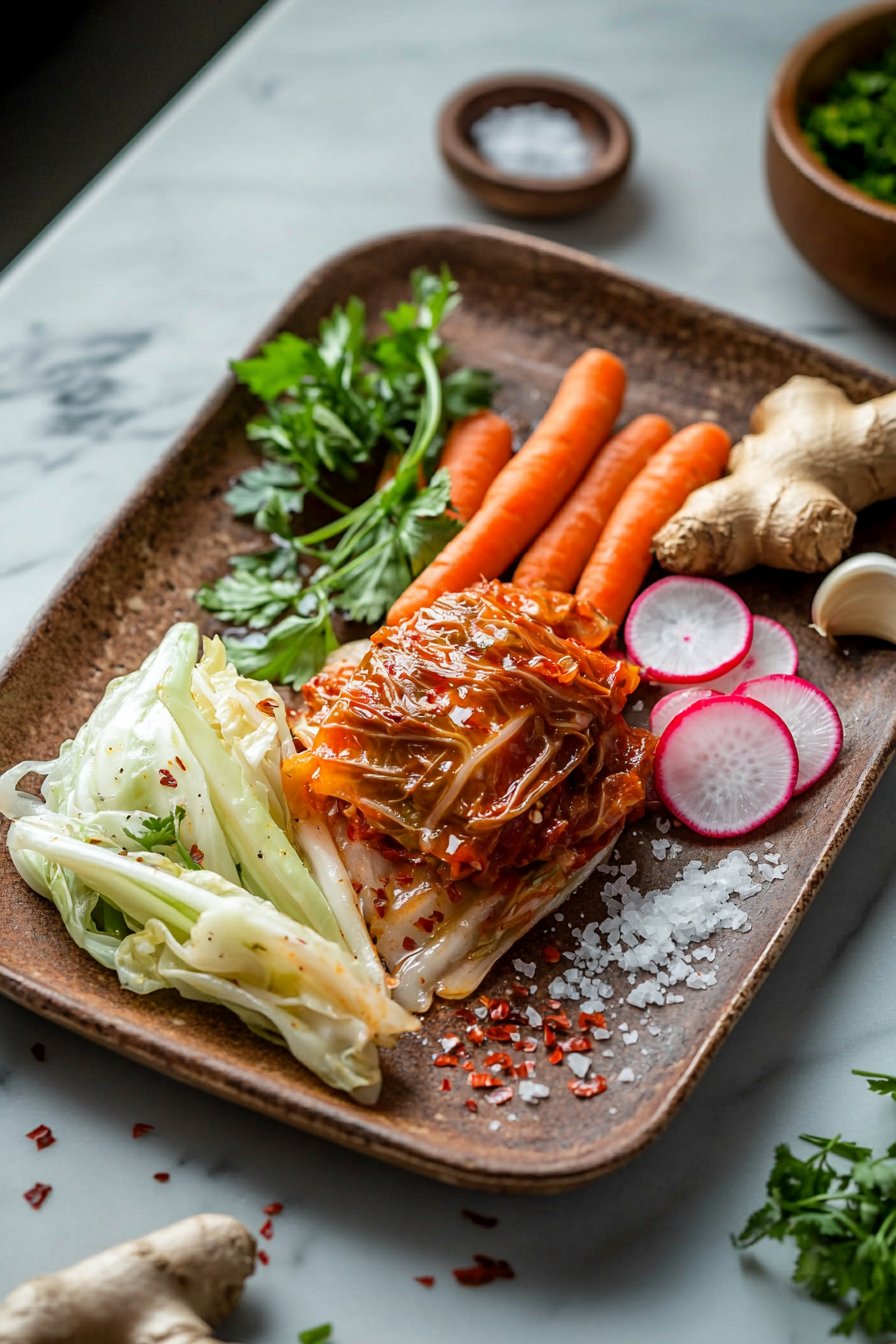

Vegan Kimchi
Ingredients
Method
- Cut the Napa cabbage lengthwise into quarters, then chop it into bite-sized pieces. In a large bowl, sprinkle salt over the cabbage, mixing well to coat evenly. Let it sit for about 2 hours to soften and draw out moisture.
- After 2 hours, rinse the cabbage under cold water to remove excess salt and drain thoroughly.
- In a small bowl, combine the minced garlic, ginger, and red pepper flakes to create a spicy paste. Adjust the amount of red pepper flakes according to your preference.
- In a larger bowl, combine the drained cabbage, julienned carrots, radish, and chopped green onions. Add the salt-and-pepper paste and mix until all the vegetables are well coated.
- Transfer the vegetable mixture into a clean, airtight jar or container. Press down to ensure the mixture is tightly packed, leaving about an inch of space at the top for the mixture to expand as it ferments.
- Leave the jar at room temperature for 2-3 days. Taste along the way to check for preferred fermentation level. After that, move the jar to the refrigerator, where it should stay good for about a month.
Leave a Reply